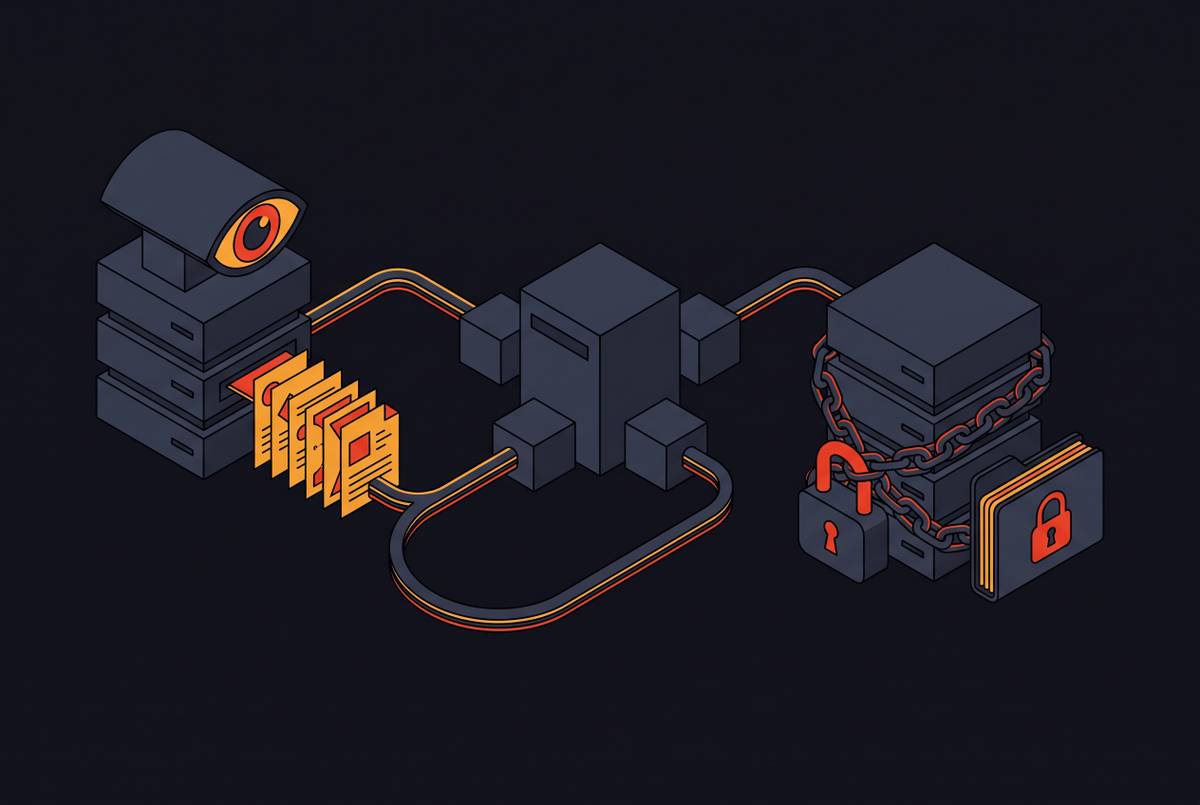
APT 42 Targeting Methods and Documented Operations
The Iranian spy group prioritizes patience and personal relationships over technical sophistication.
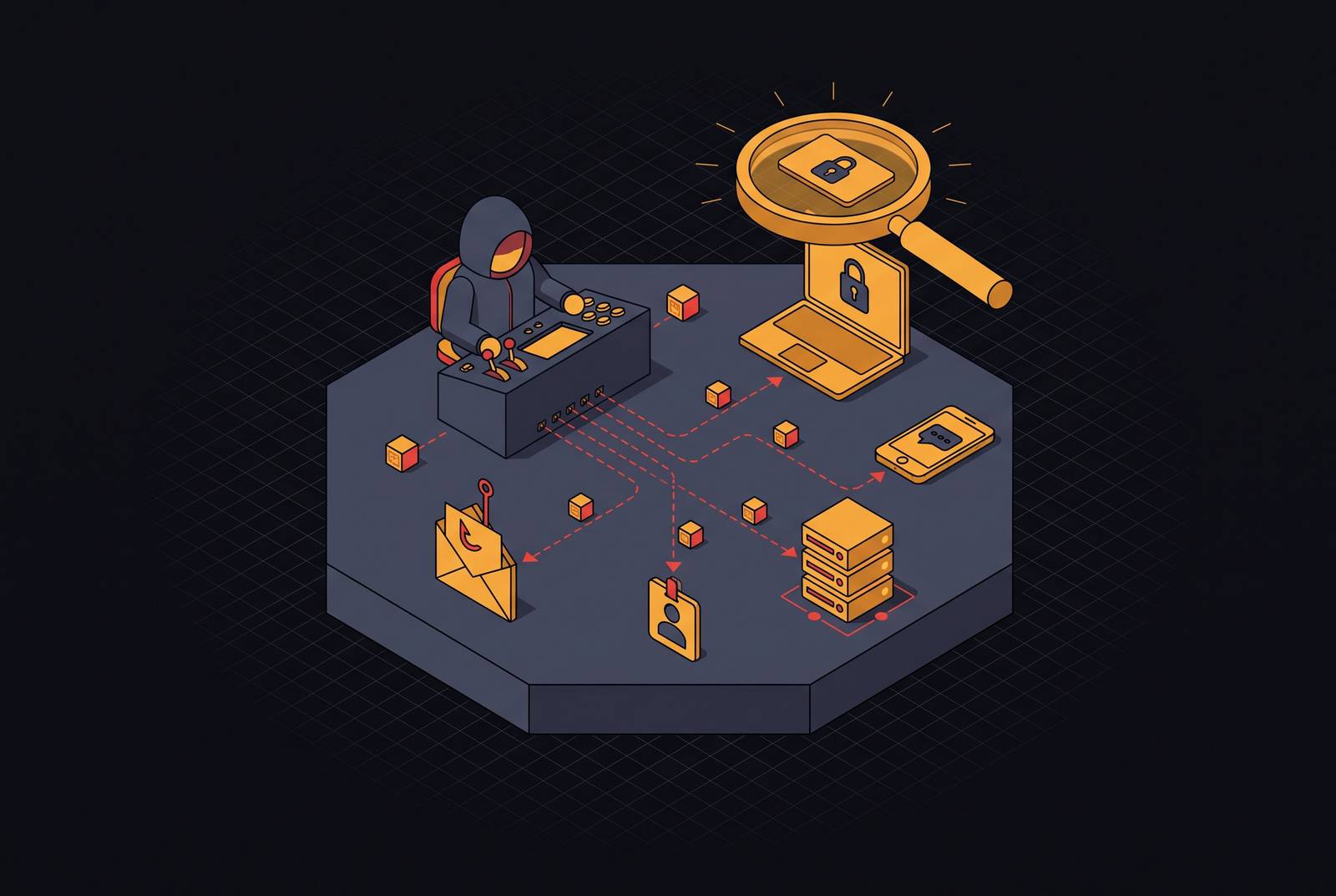
APT42’s targeting methods and documented operations show an intelligence apparatus built around patience. The group builds relationships, steals credentials, and sustains cloud access as connected parts of the same operation. For defenders, the central lesson is that the threat follows a person’s trust and accounts, often well beyond the organization’s security perimeter.
What APT42 is and who it serves
APT42 is a cyber-espionage group attributed to Iran’s Islamic Revolutionary Guard Corps Intelligence Organization (IRGC-IO), active since at least 2015. Its mission is intelligence collection for Iranian state interests. That mandate explains the people on its target list, including foreign policymakers, journalists, academics, NGO personnel, and dissidents abroad. Their knowledge and relationships make them useful intelligence targets.
The individual is usually the objective. An organization can provide a route to that person without being the main subject of the operation. Brandefense’s APT42 profile describes motivations of espionage, surveillance, and suppression of perceived threats to the Iranian regime, and lists aliases including UNC788 and CALANQUE. A threat model based only on an employer’s industry can miss someone whose contacts make them a target for the group.
Why patience is the operative weapon, not malware sophistication
APT42 invests days or weeks in building a relationship before introducing anything malicious. Realistic conference invitations and drawn-out conversations give the target reasons to keep replying across personal email, corporate accounts, and WhatsApp. The dangerous request arrives after the sender feels familiar. By then, the interaction looks less like an unsolicited approach and more like unfinished business. The attacker has put the phishing email through a long character-reference check.
That preparation shifts the detection burden toward individual judgment, precisely when the conversation has conditioned the individual to trust its source. The malicious link does not need to establish credibility on its own because the preceding exchange has already done that work. Compared with volume-based operations, APT42 trades scale for precision and deniability.
MuddyWater also runs targeted spear-phishing campaigns, but APT42’s distinguishing feature is the depth of its investment in rapport. The useful contrast is between winning attention and cultivating trust. Patience lets the group make a technically dangerous step feel like a socially ordinary one, weakening the warning signs that conventional awareness training asks people to spot.
How the three operational pillars — credential harvesting, mobile surveillance, and malware deployment — work as one system
APT42 combines credential harvesting, mobile surveillance, and selective malware deployment across a target’s accounts and devices. Credential theft opens cloud accounts, while mobile surveillance intercepts communications on personal devices. Malware supplies persistent host access when the other approaches are insufficient. Each gives the group another way to reach the person and the information it wants.
Credential harvesting rests on at least three distinct infrastructure clusters, using varied domains, impersonation patterns, and decoys against policy, government, media, and NGO targets. The group researches the security configuration of a target’s email provider, including second-factor arrangements. Its GCollection phishing kit includes MFA bypass support. That preparation connects the social approach to the technical obstacle waiting behind it. Trust gets the target to the door, but the group has also studied the lock.
When credentials alone are insufficient, TAMECAT provides a PowerShell-based backdoor that operates almost entirely in memory. It establishes redundant command-and-control across HTTPS, Discord, and Telegram, with communications protected by AES-256 encryption. Cloudflare Workers and Firebase help its traffic blend with normal web activity, while a OneDrive document decoy simulates legitimate user activity. The backdoor also steals browser session cookies. Those cookies can allow re-entry into cloud accounts after a password reset, so malware deployment reinforces the access originally obtained through credential theft.
What documented operations reveal about target selection logic
SpearSpecter shows how the intelligence mandate extends beyond a target’s work account. The Israel National Digital Agency publicly disclosed the campaign in November 2025, following its detection in September 2025, and assessed it as ongoing. APT42 Cluster D targeted senior Gulf defense and government officials through WhatsApp, went after their family members too, and used TAMECAT. The family connection is revealing. The group follows any route to a person, even when that takes it beyond the boundaries of the person’s employer.
Other campaigns show why attribution precision belongs in the analysis. UNK_SmudgedSerpent targeted US-based academics and think-tank personnel researching Iranian societal reform and IRGC militarization in 2025. Its carefully spoofed emails impersonated foreign-policy experts Suzanne Maloney and Patrick Clawson. The cluster has overlapping techniques with multiple Iranian actors, including TA453/Charming Kitten, but is not definitively attributed to APT42. It demonstrates a live US domestic threat to those researchers without justifying the merger of every related campaign under one label.
APT42 masqueraded as the Washington Institute for Near East Policy in activity dating from April 2024, targeting Israeli diplomats, journalists, and US think-tank researchers. It also used understandingthewar[.]org to impersonate the Institute for the Study of War against US military members. Google TAG reported that APT42 registered brookings[.]email to spoof the Brookings Institution in campaigns targeting Israel. Familiar institutional names gave the approaches a plausible professional setting.
Google TAG found and disrupted APT42 Cluster C credential phishing aimed at the personal email accounts of roughly a dozen people with ties to President Biden and former President Trump during the 2024 US presidential election. The targets included current and former US government officials and campaign-associated individuals. Personal accounts were routes to people positioned close to political decisions and communications.
The TA453 March 2026 operation makes the patience sequence especially clear. Proofpoint identified the attacker-owned account McManus.Michael@hotmail[.]com impersonating Michael McManus, Director of Research at the Henry Jackson Society, and listed the sender in February 2026. The operation used a genuine OneDrive link for its first document before delivering a malicious payload. A safe first interaction became evidence the attacker could spend later.
Unit 42 assessed with lower confidence that a group overlapping with APT35, also known as Agent Serpens or Charming Kitten, was behind a fraudulent Mega Model Agency website aimed at Iranian dissidents and activists in Germany. That case should not be presented as established APT42 activity. Across the documented operations, geopolitical developments help explain shifts in tempo, including the Abraham Accords, the 2024 election cycle, and the February 2026 US-Israeli strikes on Iran. The targets are selected for their intelligence value within those conditions.
How AI-assisted research changed the scale and detectability of social engineering
AI use spans reconnaissance, persona design, translation, lure copy, malware engineering, code generation, debugging, and exploitation research. Email drafting is only one part of that preparation. The broader change is assistance with the research needed to make a fabricated relationship plausible.
For defenders, that removes two familiar shortcuts from phishing detection. Clumsy grammar and generic, implausible pretexts cannot serve as dependable filters when lures are well written and culturally fluent. The grammar police have lost their jurisdiction. An attacker can now produce the polished language that recipients were once encouraged to treat as a reassuring sign.
That changes what convincing prose proves. Organizations that trained staff to rely on linguistic tells have a gap precisely where APT42 invests its preparation effort. AI helps the group tailor approaches to more people while removing clues that might give those approaches away.
How APT42 sustains access inside cloud environments without leaving endpoint evidence
Once inside Google Workspace or Microsoft 365, APT42 can sustain access without installing endpoint malware. It abuses built-in features that security teams may see as noise they have little reason to check. OAuth application consents can grant attacker-controlled apps durable access, mailbox forwarding rules can silently exfiltrate email, and persistent cloud API keys can survive password resets. These mechanisms do not require a suspicious executable on a laptop. An endpoint search can therefore come back empty while the account remains compromised.
This is the technical expression of the same patience seen in the opening conversation. Rather than depending on repeated conspicuous intrusions, the group establishes access that can remain useful over time. Brandefense describes how APT42 uses cloud services more and more for command-and-control, so its malicious communications blend in with an organization’s normal web traffic. The familiar platform becomes part of the disguise. The resulting intrusion can persist for months inside cloud collaboration services without endpoint evidence for detection tools to surface.
Stolen session cookies add a separate remediation problem. A cookie represents an already-authenticated session, so changing the password alone may not remove the attacker’s access. The appropriate response includes session revocation and refresh token invalidation. A long dwell time need not show that a team missed malware, since the persistence mechanism may be somewhere its endpoint tools cannot see.
Where conventional defenses break down against this methodology and what actually works
IOC-based detection is a weak primary defense against a method built around custom malware, legitimate cloud services, and few static signatures. Endpoint-centric controls also have limited reach when the group approaches individuals through personal devices and personal cloud accounts. Both limitations follow from the attack surface. An operation may start with a trusted conversation outside the corporate perimeter, so that perimeter captures only part of the threat.
Single alerts can be equally misleading. A browser invoking the search-ms handler, a remote shortcut spawning Command Prompt, and PowerShell fetching content are individually low-signal events. In sequence, they form a much stronger detection signal. Likewise, the genuine OneDrive document in the March 2026 operation shows why a safe first link gives no guarantee that later messages are safe.
The practical response starts with controls matched to those mechanisms. Phishing-resistant MFA, including FIDO2 security keys or passkeys, ties authentication to the genuine site’s address so that sign-in fails on a lookalike page. Behavioral detection needs to connect anomalies across cloud, identity, and endpoint telemetry. Monitoring OAuth consent grants, mailbox forwarding rules, and API key generation addresses the persistence layer, while session revocation addresses established access after credential theft. None of those steps depends on the attacker making a spelling mistake.
Threat modeling must also follow the people involved. Policy staff, journalists, researchers, and regional leadership in Middle East-related functions form an exposure category that sector- and geography-based models can miss. Their risk comes from what they know and whom they communicate with, including through personal accounts.
Why practitioner-grade threat intelligence is the foundation for communicating this threat accurately
A description that stops at “Iranian phishing group” leaves out the connection between relationship-building, credential capture, cloud persistence, and fileless execution. That connection determines which defenses can detect or interrupt the operation. Attribution distinctions are equally important, particularly when related clusters share techniques without a definitive link. Precision is not decorative here.
Generic actor categories and recycled headlines do not demonstrate an understanding of why a password reset may be insufficient or why a harmless document can support a malicious sequence. Operational detail earns credibility by explaining consequences. Technical inaccuracies spend that credibility quickly.
For vendors communicating this threat, the lesson is to anchor content in live threat intelligence and apply the rigor practitioners bring to their own analysis. That requires domain expertise during production. Accurate communication must preserve the campaign structure, the interaction between techniques, and the limits of attribution.