Doxxing Definition and Its Evolution as a Legal Concept
Lawmakers struggle to define doxxing legally as public data becomes a weapon through aggregation.
Doxxing’s evolution from hacker slang into a legal concept is a story about the limits of a label. Over three decades, lawmakers have tried to spell out in law when a known form of online abuse breaks the law. The central problem remains unsettled, namely how intent, consent, and the assembly of public information distinguish harmful targeting from lawful disclosure, and why that boundary changes across jurisdictions.
What doxxing meant before it had a legal definition
Doxxing entered hacker slang in the 1990s, derived from “dropping documents,” and meant exposing a rival’s real-world identity within an online community. Early on, it was used in fights between peers, including gaming disputes, anonymous forum feuds, and social media conflicts. The term described stripping away someone’s online anonymity before its later use for a coordinated tool of political or professional targeting. The term named a practice that participants understood without needing a statute to explain it.
Conduct now called doxxing was assessed, when it was assessed at all, under existing harassment, stalking, or telephone-threat statutes. Those laws were not built for digital disclosure, so the conduct had to fit categories designed for something else. By the time legislators took up the term, it already carried a social meaning but no agreed legal test.
The three elements that any legal definition of doxxing must resolve
Every legal treatment of doxxing has to answer three questions, which are what information qualifies, whose consent matters, and what intent makes disclosure unlawful. These are not separate boxes that a legislature can tick and forget. A broad definition of personal information makes the intent requirement more important, because more ordinary disclosures could fall within the law. A narrow definition reduces that reach but may leave harmful targeting outside it.
The law must identify which information is capable of exposing someone to harm. Older statutes limited their scope to home addresses and phone numbers. Newer laws are starting to cover workplace details, school enrollment records, daily routines, and financial records. That broadening changes the conduct covered. Legislators have yet to resolve whether the law should protect a fixed set of identifiers or reach the wider body of information that makes a person targetable.
Consent complicates that choice because unauthorized disclosure is a consistent element across jurisdictions, while much of the material used in doxxing is already public. Public availability does not, by itself, answer whether someone authorized a harmful compilation. Intent helps draw another line, since sharing public information is not a crime in itself. Some statutes require proof of an intent to harass or threaten, while others focus on whether disclosure created a reasonable fear of harm.
How the aggregation of public data became doxxing's hardest legal problem
Most doxxing campaigns assemble individually innocuous, publicly available facts into a profile that enables real-world targeting. Each fact may appear harmless in isolation, while the combination is dangerous. That is why the public/private distinction is an unreliable legal shortcut.
The National Association of Attorneys General notes that accessible AI tools and automated data scraping have intensified the scale, precision, and anonymity of these attacks. Information that once took hours of manual searching can now be compiled in minutes. The practical distance between scattered public facts and a usable targeting profile has shrunk. A statute focused only on secret information can miss the harm created by putting public information together.
The ACLU of Illinois opposed that state’s doxxing law as “overly broad and inclusive of protected speech,” including “truly publicly available information.” A law that reaches compilations of public facts may capture harmful targeting, but it also reaches into material people may lawfully publish. Legislatures have responded unevenly, with some statutes confined to traditional private identifiers and others broad enough to cover aggregated public data. None has yet articulated a clear legal test for when aggregation crosses the line.
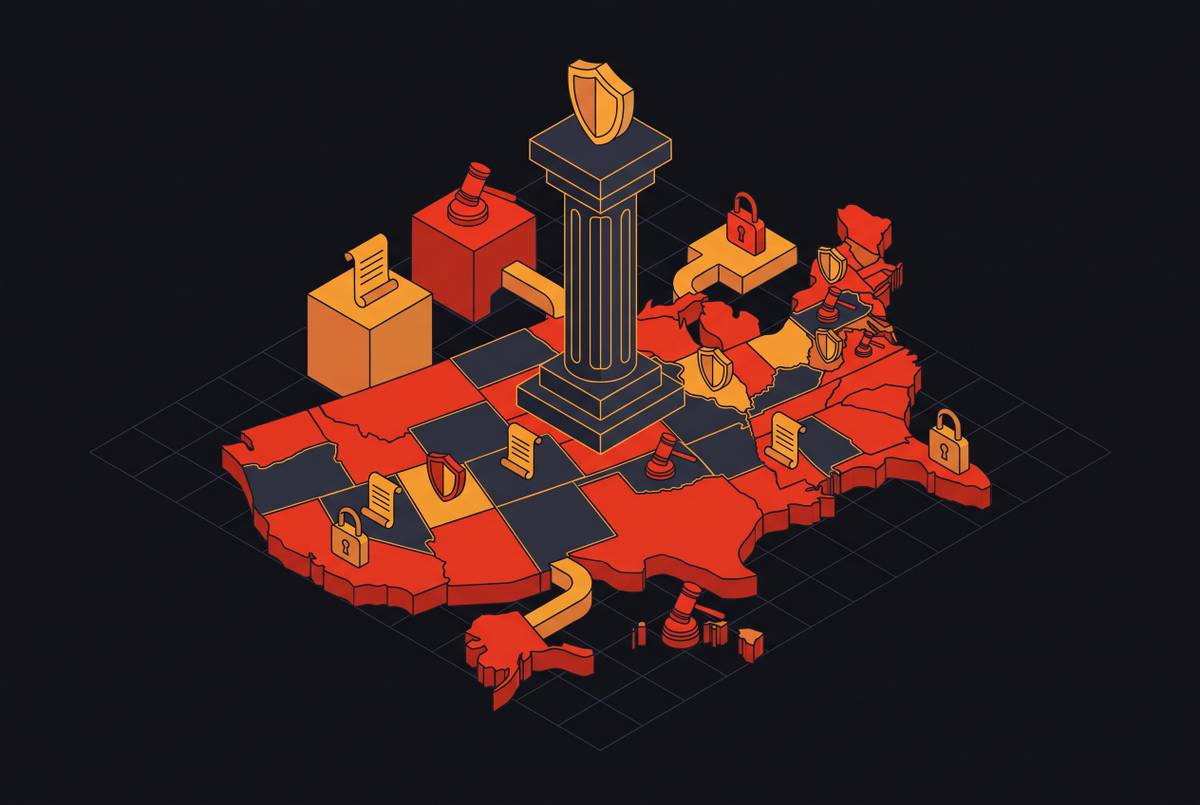
How U.S. states built a patchwork of doxxing law over two decades
The Council of State Governments described a divided landscape as of mid-2025. Only three states, namely Alabama, California, and Illinois, had established doxxing as a standalone crime with an explicit statutory definition. Other states had made doxxing a standalone offense without defining the term, while Arizona and Connecticut had changed their existing stalking or harassment statutes. These differences concern more than legislative housekeeping.
Alabama HB 287 (2023) shows especially clearly how a law can put intent at its center. It covers electronically publishing, posting, or providing an individual’s personal identifying information with the intent that others use it to harass or harm that individual. The definition centers third-party facilitation, so the publisher need not be the person expected to carry out the harassment. Washington HB 1335 (2023), by contrast, requires publication without consent, intent or knowledge that the information will be used to harm, and a resulting injury. Its covered consequences include physical harm, significant economic injury, mental anguish, fear of serious bodily injury or death for the individual or a close relation, or a substantial life disruption.
California’s Doxing Victims Recourse Act (AB 1979), effective January 1, 2025, adds a different route through civil enforcement. It lets victims seek statutory damages, actual damages, punitive damages, and attorney’s fees, making it the strongest civil enforcement model in the country. Connecticut SB 989 (2021), meanwhile, extended second-degree stalking to certain electronic disclosures of personal identifiable information under Conn. Gen. Stat. § 53a-181d. Texas Penal Code § 42.074 was also amended to cover disclosure through an electronic communication, with the change applying to offenses committed on or after September 1, 2025.
Protection also depends on who is targeted. The Council of State Governments identifies seven states whose anti-doxxing laws protect specific public-sector officials rather than all individuals, namely Alabama, Colorado, Delaware, Minnesota, New Jersey, Oklahoma, and Pennsylvania. Private citizens in those states have no equivalent statutory protection under those laws. The protected class is another legal threshold, although other laws could apply. The patchwork is not merely a map of different penalties, but a map of different answers about what happened, why it happened, and who counts.
What the federal layer covers and what it deliberately leaves out
There is no comprehensive federal doxxing statute. Federal prosecutors instead rely on existing laws covering cyberstalking, stalking, threats, obstruction, false emergency calls, and other interstate crimes. The choice depends on the intent, conduct, and harm in the case. This approach reflects a coherent theory, namely that doxxing can be an aggravated form of an existing harm. A new name for the conduct does not necessarily require a new offense.
That theory has limits because each existing offense brings its own requirements. The federal stalking statute, 18 U.S.C. § 2261A, can apply to interstate electronic communication used to stalk, harass, or intimidate someone across state lines. It requires a pattern of conduct, however, which a single-post doxxing incident may not satisfy. The gap follows from the statute’s design rather than from any conclusion that one disclosure cannot be dangerous.
Two bills introduced in 2026 would change different parts of that picture. Rep. Josh Gottheimer (D-NJ-5) introduced H.R. 8927, the Stop the Doxx Act, on May 20, 2026, and it was referred to the House Committee on the Judiciary. It carries a reported ten-year maximum for first offenders and a civil private right of action. Rep. Ro Khanna (D-CA-17) introduced H.R. 9857, the Protecting Americans from Doxing and Political Violence Act, on July 22, 2026, and it was referred to the House Committee on House Administration. That bill would require government agencies to take covered personal information about at-risk individuals off government systems that the public can access. Both remain in committee as of the sources’ coverage, and neither has been enacted.
Why the First Amendment turns the definitional debate into a political one
The strongest objection to broader doxxing laws concerns the risk that an imprecise law can punish protected speech while claiming to prevent it from becoming dangerous. SPJ Executive Director Caroline Hendrie stated, “A vague anti-doxing law could be used to criminalize the truth”. The press-freedom coalition argues there is “every risk that an imprecisely drafted statute could become a politicized instrument to shut down commentary or criticism on the behavior of government officials.” This objection concerns the reach of state power.
The basic constitutional floor is not the disputed ground. The First Amendment does not protect true threats, speech that qualifies as harassment or stalking, or the intentional disclosure of truly private information to help someone cause harm. The dispute is over where to draw the line between those kinds of speech and protected accountability reporting. When a law covers public facts and uses intent or fear to decide whether disclosure is lawful, its wording matters a great deal. So does the identity of the institution entrusted to enforce it.
DOJ and DHS messaging has framed enforcement as protecting federal workers and their families. Journalists and advocates argue that the same definitional flexibility could be used against dissent or investigative reporting. Both positions turn on the power to characterize a disclosure, whether as a means of targeting someone or as legitimate scrutiny of official conduct. The intent standard therefore becomes more than a technical drafting choice. It helps determine who can publish what about people who exercise public power.
Where the definitional contest now stands and what it means for the targets most at risk
Doxxing has moved well beyond disputes over gaming and forum identities. Journalists, judges, educators, election workers, and public officials are now targets of ideologically motivated campaigns designed to deter participation or silence dissent. The National Association of Attorneys General describes a shift from separate acts to people working together to persecute someone online. That change raises the stakes of definition because the exposure is no longer only part of a personal feud. It can be a way to drive people out of public life.
The laws built so far are predominantly prosecutorial tools that create liability after harm has occurred. Their variation means the same disclosure may be a felony in one state, support a civil claim in another, and remain entirely unaddressed in a third. Doxxing also differs from swatting, in which someone makes a false emergency report to get armed law enforcement sent to someone’s address. The offenses are legally distinct but operationally linked, because swatting events typically rely on personal information obtained through doxxing. People who want to cause harm can take advantage of that legal divide, even though the target faces the dangers together.
The Uniform Law Commission’s model-legislation process is the most significant ongoing attempt to produce a definition that could travel across state lines. It is also the process the press-freedom coalition is contesting, and it remains unresolved as of the sources’ coverage. Newer bills are expanding which information qualifies, aggregation is sharpening the dispute over whose consent matters, and intent remains the main site of First Amendment conflict. For targets, those unresolved choices affect whether the law recognizes their exposure and what remedy follows. The word is familiar, but the legal boundary is still being drawn, with both personal safety and protected speech on the line.