Digital Evidence Admissibility in Cybercrime Trials
Courts must prove digital evidence's authenticity, integrity, and lawful collection before trial.
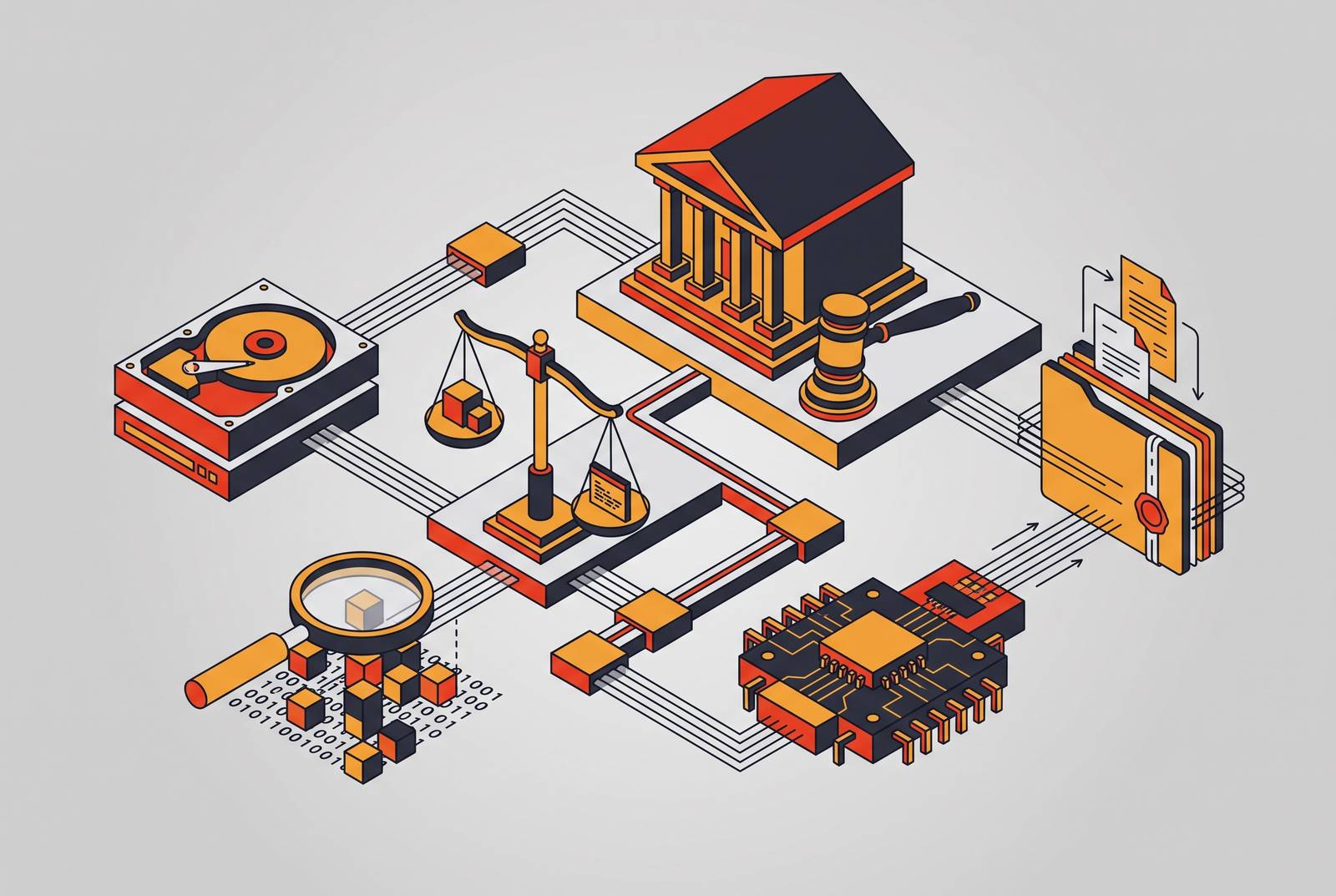
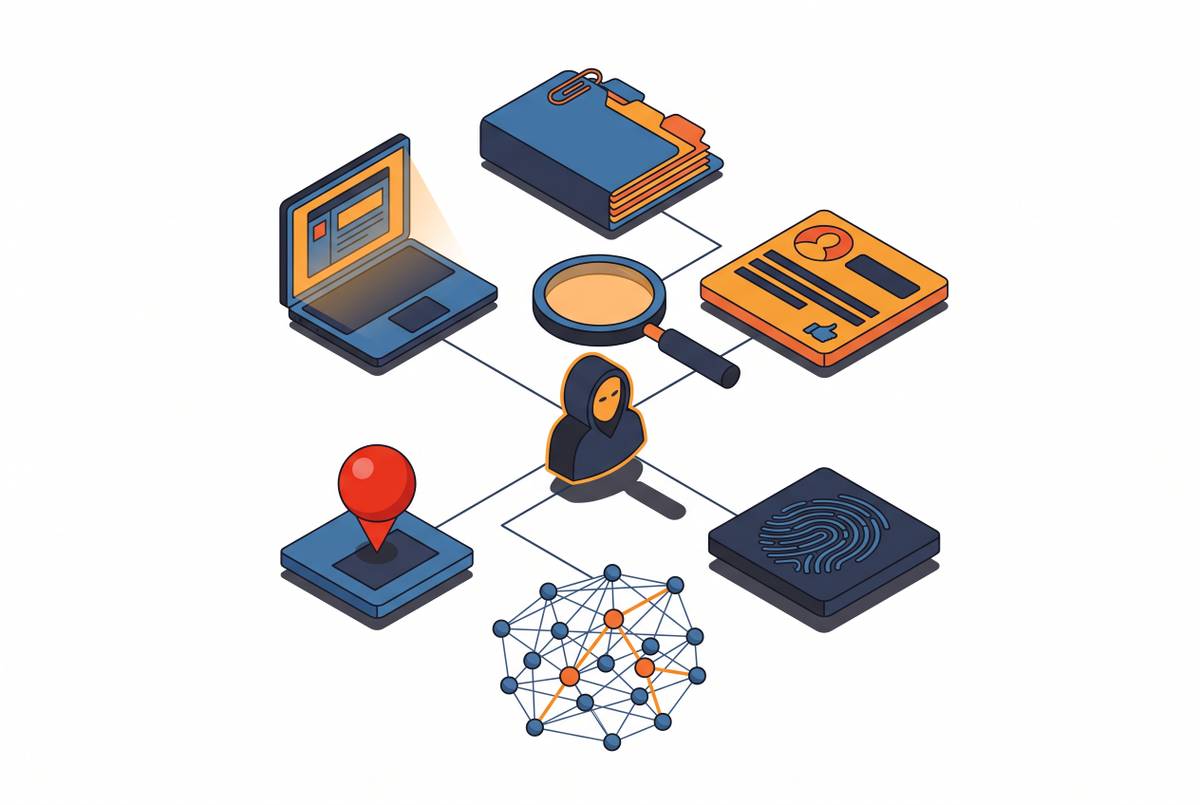
A knife has a handle you can hold and fingerprints that stay put. A text message has neither. That's the whole problem with digital evidence: it's intangible, easy to alter without leaving a mark, and just as easy to fabricate from scratch, so courts can't size it up the way they size up a murder weapon or a signed contract. A gun in an evidence bag carries its own story. A screenshot carries nothing until someone proves where it came from, when it was made, and whether anybody touched it since. Research from UNC School of Government (Welty) traces how courts started out deeply skeptical of digital evidence, loosened up over time, and now face a new wrinkle: AI may be about to push that skepticism right back up. The burden to prove a digital file is what it claims to be falls on whoever wants to use it, not on the side trying to keep it out, and that burden has to be cleared before a single argument about what the evidence means gets heard. Digital forensic work follows a set order (identification, preservation, collection, examination, analysis, presentation) and a mistake at any single step can sink the whole exhibit, not just the step where it happened.
The four requirements courts apply to digital evidence
Courts don't treat digital evidence admissibility as four boxes to check off one by one. They treat it as a chain, and a chain is only as strong as its weakest link. Evidence that's authentic but was seized illegally gets thrown out. Evidence that was collected by the book but shows signs of tampering gets thrown out too. Research published in PLoS ONE (Ismail and Akram Zainol Ariffin, September 2025) lays out the standard: digital evidence gets admitted when it can be shown to be authentic, reliable, complete, and backed by a clean chain of custody, with each piece propping up the others. Relevance opens the door: the evidence has to matter to a fact in the case, because none of the other requirements mean anything if the evidence wouldn't move the needle anyway. Authenticity is what ties the artifact to a real source and a real moment in time, letting the proponent argue the file actually came from where they say it did. Integrity is what proves nobody touched the file after it was captured, and that's what gives the authenticity argument any staying power once the file changes hands a few times. Lawful collection sits above all three as a veto: evidence gathered in violation of the Fourth Amendment in the US, or GDPR in European jurisdictions, gets excluded no matter how carefully everything else was handled.
How authentication works in practice across common evidence types
Authentication doesn't demand certainty. It demands that a reasonable juror could look at the file and the story behind it and conclude it is what the proponent says it is. That's a lower bar than "prove it beyond doubt," but it still takes real work beyond handing over a printout. Welty (May 2026) draws out how the path to authentication changes depending on how the evidence was obtained: an email authenticated by the person who received it goes through a different process than the same email pulled off a seized laptop by a forensic examiner, or obtained straight from the email provider under a search warrant. North Carolina's appellate courts and the Fourth Circuit have handled this across a range of evidence types, and the demands shift with the format. Texts and direct messages often get authenticated through the recipient's testimony. Social media posts usually need more, since accounts can be spoofed or hacked. Photos and video need someone who can speak to the device and the moment of capture. Device-extracted material, like browsing history or GPS logs, usually calls in a forensic examiner directly. A screenshot gets rejected constantly in these cases, mostly because it strips away the metadata a court actually wants to see. That metadata (headers, timestamps, device IDs, GPS coordinates) is what courts expect proponents to lean on, but it can be stripped or faked, so testimony about how the file was handled has to back up whatever the metadata claims. Cryptographic hashing does the heavy lifting on the technical side: a hash computed the moment a file is collected, then recomputed before it's shown in court, proves nothing happened to it in between.
Integrity and chain of custody as the procedural backbone of a forensic investigation
A hash value is just a string of characters until a person can stand up and explain how and when it was generated. That explanation is the chain of custody, and it's what turns a technical fact into testimony a court can rely on. Every time a piece of evidence changes hands, gets copied, or gets accessed, that event needs a record, starting the moment it's collected and running all the way to the moment it's shown in court. One missing entry in that log doesn't just raise a question about that gap. It puts the entire exhibit at risk of getting challenged. The PLoS ONE research (Ismail and Akram Zainol Ariffin) walks through the standard forensic lifecycle, identification, preservation, collection, examination, analysis, presentation, and stresses that each of those stages needs its own strict protocol, because sloppiness at any point risks modifying or losing evidence, and how rigorously those protocols get followed has a direct effect on whether a judge lets the evidence in. Chain-of-custody problems are usually about handoffs between investigators that nobody wrote down, storage drives that never got labeled, or a third party who accessed a device and nobody logged it. Courts don't distinguish between a procedural gap and a technical one. Both get treated as the same kind of hole in the story, and both can sink the exhibit the same way.
What lawful collection means for investigators
A hash can be perfect, the chain of custody airtight, and the evidence still gets thrown out if it was collected the wrong way. Evidence gathered in violation of the Fourth Amendment or an applicable privacy law is excluded no matter how carefully it was handled or how damning it looks. The Fourth Amendment only restrains government actors, which creates a specific wrinkle in cybercrime cases: data often gets collected first by a private forensic firm or a company's own IT team, not by police, and the question becomes whether law enforcement directed that collection or later adopted it as their own. Cross-border cybercrime investigations add another layer of difficulty on top of that, since a single case can require compliance with GDPR, a country's own data protection law, and mutual legal assistance treaty procedures all at once, each one setting its own bar for what counts as lawful collection. The Joe Sullivan case out of Uber shows how this plays out when the facts get messy: the legal consequences there attached not to the original data breach, but to how the evidence of that breach got handled and described afterward. The paperwork and the characterization carried as much legal weight as the hack itself.
Courts' Test for Forensic Methodology and Tool Validation
The Daubert standard asks whether expert testimony rests on methodology that can be tested, has a known error rate, has been through peer review, and is accepted by the relevant scientific community. Applied to digital forensics, the tools used to pull and analyze evidence have to hold up to scrutiny, as do the conclusions an expert draws from them. The PLoS ONE study (Ismail and Akram Zainol Ariffin) points to a real structural problem here: courts tend to trust commercially validated tools over open-source ones, mainly because there's no standard framework for validating open-source alternatives, and that bias creates a real financial barrier for investigators working with smaller budgets. To test this directly, the study ran a side-by-side comparison between commercial tools, FTK and Forensic MagiCube, and open-source tools, Autopsy and ProDiscover Basic, across three separate scenarios: preserving and collecting original data, recovering deleted files through data carving, and searching for specific artifacts. Each test ran three times to check for consistency, with error rates measured against known reference files. The authors built a three-phase framework out of that work, covering basic forensic processes, result validation, and forensic readiness, aimed squarely at helping open-source tool output meet Daubert requirements. Investigations generally lack any standard process for generating the kind of data a court needs to validate a method scientifically, and that absence makes life harder for cross-examiners and judges even when the underlying tool is sound.
Why AI-generated and AI-enhanced evidence strains every requirement
AI hasn't added a fifth requirement to this framework. It's made all four of the existing ones harder to prove and harder to challenge, because nobody, not the lawyers, not the judges, can easily look inside the model and see what it actually did. In State v. Puloka (Washington, 2024), a court excluded AI-enhanced video evidence after the prosecution couldn't show the enhancement method was generally accepted among forensic video analysts. The court found the AI tool used "opaque methods to represent what the AI model 'thinks' should be shown" rather than what the footage actually captured, a straightforward Frye failure landing on an AI system instead of a traditional forensic method. Compare that to federal litigation involving Bitcoin Fog, where courts admitted blockchain tracing analysis, heuristics included, because the methodology was disclosed up front and the expert stuck to describing the method rather than asserting guilt. The contrast between those two cases draws the line clearly: disclosed, explainable methodology gets in, and opaque "trust the model" output doesn't. The risk cuts both ways. Generative AI can fabricate metadata and alter files in ways that still pass a hash check, undermining the very tools courts rely on to confirm authenticity, while at the same time giving bad-faith litigants a new excuse to challenge evidence that's completely genuine. Welty's research leaves open the question of whether the decades-long trend toward courts readily accepting digital evidence is about to reverse now that AI is in the mix. Proposed Rule 901(c) would address part of this directly: once an opponent challenges evidence as AI-generated (a deepfake), the rule would require the proponent to show it's more likely than not authentic, shifting the burden back onto whoever wants the evidence admitted. That rule targets one specific fight, disputed authenticity, and leaves plenty of the broader AI problem for courts to work out case by case.
Confirmation bias in forensic analysis undermining evidence that clears every technical hurdle
An exhibit can be collected lawfully, hashed correctly, and pulled with a validated tool, and still mislead a jury if the analyst who picked it out was working backward from a theory they'd already settled on. Research published in Science & Justice (Bérubé et al.) examined a terrorism-related court case and found that both the analysts and the investigators involved had selected and kept traces that fit their starting hypothesis, a textbook case of confirmation bias operating quietly inside a process that checked every procedural box. The example from that research makes the point better than any explanation could: a Google search for "chemical reaction" pulled from a defendant's browsing history got presented as evidence of intent to build explosives, until cross-examination showed that the searches right before it, on the same day, were about ordinary school topics. The artifact itself wasn't the problem. The choice to show that one search and leave out the rest was. Daubert analysis has no built-in way to catch this kind of selective framing unless cross-examination drags it into the open. A defense team's ability to see the full dataset, not just the handful of exhibits the prosecution chose to present, functions as a real safeguard directly tied to whether the evidence deserves trust.
What rigorous admissibility practice requires from investigators
Admissibility doesn't get decided in the courtroom. It gets decided months earlier, in every choice an investigator makes about how to collect, document, select tools, and analyze evidence long before anyone's arguing in front of a judge. Forensic readiness, building documentation habits, tool validation records, and chain-of-custody steps into standard practice before a specific case even starts, is the only way to meet Daubert requirements consistently instead of scrambling to meet them one case at a time. The three-phase framework from the PLoS ONE research (Ismail and Akram Zainol Ariffin), covering basic forensic process, result validation, and readiness, gives a concrete shape to what that looks like for teams leaning on open-source tools. None of this works, though, if the people producing a forensic report can't speak the language of the courtroom it's headed into. Translating a hash value, a metadata trail, or an extraction log into something a jury or a judge can actually follow takes a different skill set than running the extraction itself, and that gap is where threat-intelligence content studios like Cyberou have found plenty of security vendors lose credibility once their findings land in front of lawyers and prosecutors who weren't in the room for the technical work. Treating documentation, tool validation, and chain-of-custody records as something built in from day one, rather than assembled after a subpoena arrives, is what separates evidence that holds up in court from evidence that looks great in a lab report and falls apart under cross-examination.
Sources
- The admissibility of digital evidence from open-source forensic tools: Development of a framework for legal acceptance - PMC
- The admissibility of digital evidence from open-source forensic tools: Development of a framework for legal acceptance
- 1 Authentication and Admissibility of Digital Evidence Jeff Welty
- DEEPFAKES ON TRIAL 2.0: A REVISED PROPOSAL FOR ...