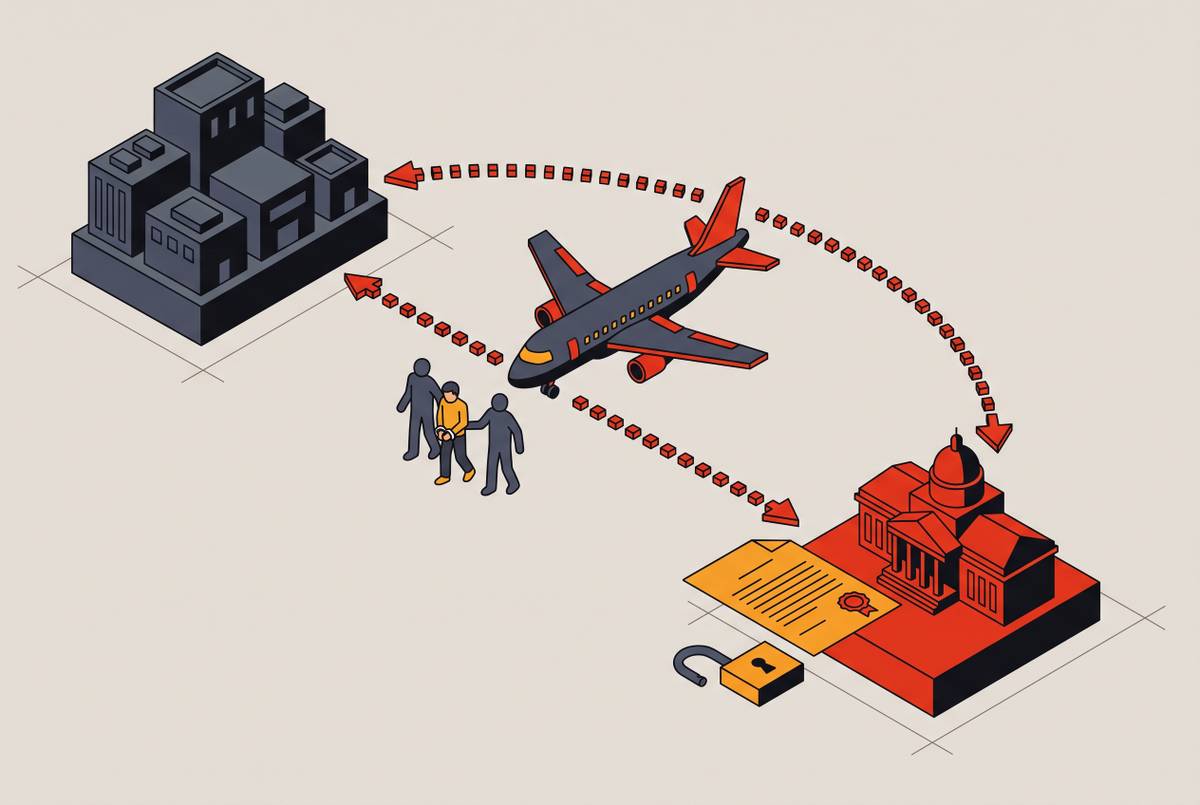
Interpol Red Notices for Cybercrime Fugitives
Interpol weaponizes global databases to catch fugitive cybercriminals at any border crossing.
A fugitive used to be able to buy distance. A fugitive could cross a border, change a name, and wait out the heat; the odds of a knock on the door dropped close to zero. That math is breaking down, and it's breaking down faster than most threat briefings give it credit for. If you read about a fugitive arrest in 2026, you aren't reading a courtroom story anymore; you're reading a map of how criminal infrastructure actually moves, who it depends on, and where it still gets caught.
Modern cybercrime doesn't sit still inside one category. Phishing crews launder money through mobile payment apps. Ransomware operators move cash through networks that also traffic people and drugs. These are poly-criminal enterprises that cross jurisdictions on purpose, so the server a defender takes offline tonight gets replaced by morning. The person behind the operation is a much harder thing to replace. The person, not the infrastructure, is the target that holds still long enough to pursue.
INTERPOL Cybercrime Director Neal Jetton said: "Cybercrime has emerged as one of the most significant criminal threats to the region. You can't meet that threat with a one-off task force anymore. What's replaced it is standing infrastructure, databases, notices, and intelligence pipelines that run continuously in the background, whether or not a headline operation is underway.
What a Red Notice is and can do
A Red Notice is a request, not a warrant. It asks law enforcement in INTERPOL's 196 member countries to locate a named person and hold them provisionally pending extradition. Each country still applies its own law, so it can arrest someone, detain them, or just let them walk. INTERPOL doesn't carry guns, it doesn't make arrests, and it doesn't rule on guilt. It circulates information and lets sovereign states decide what to do with it.
There's a second, quieter tool working alongside Red Notices called a Diffusion. A Red Notice goes through INTERPOL's own compliance review before it's published, but a Diffusion is sent directly from one national bureau to others, so it skips that central check. Both can get someone arrested at a border. Only one of them gets a close look before it goes out.
Notices are reserved for serious crimes: violent crime, organized transnational crime, drug and human trafficking, terrorism, serious economic fraud, and cybercrime. INTERPOL's own constitution bars it from touching political, military, religious, or racial cases, a rule meant to stop the system from becoming a tool for settling scores. Whether that rule holds in practice is a separate question.
How the notice becomes a border tripwire at scale
The real power of a Red Notice is what happens every single time anyone, anywhere, runs a passport or an ID through an INTERPOL database, not the single dramatic arrest at an airport gate. So a years-old notice can go off any time someone runs a border check, a traffic stop that pulls records, or a visa application. Think of it less like an arrest warrant and more like a tripwire strung across every checkpoint in the world, waiting for the right foot.
Operation Trigger X ran from 22 June to 5 July 2026 across 17 countries in Europe and Central Asia. It was built to target firearms trafficking, nothing more exotic than that. But when officers ran names through INTERPOL's systems, people wanted on Red Notices and other INTERPOL alerts turned up anyway, arrested as a byproduct of a gun investigation that had nothing to do with their original case. Nobody was hunting those fugitives that week. The system found them anyway, because the notice was already live and the database check didn't care what the operation was actually about.
That's the compounding logic at the center of the whole system: a notice doesn't expire when the original investigation ends. It sits active, and it fires whenever any unrelated operation happens to touch the same records. Operation Phoenix was a separate three-week sweep in September 2026, and it ran more than 700,000 cross-checks against INTERPOL databases, which turned up 246 hits on individuals and travel documents. So if you add up Trigger X plus every firearms case, every drug case, and every unrelated sweep run anywhere in the world, the tripwire effect stops looking like a clever metaphor and starts looking like basic arithmetic.
The intelligence pipeline that feeds the notice system
None of that works without something feeding it first. A Red Notice sits at the end of a long intelligence assembly line, and how fast and how accurately that line moves decides whether the notice is useful or just paperwork. The notice is the trigger. The pipeline is the gun.
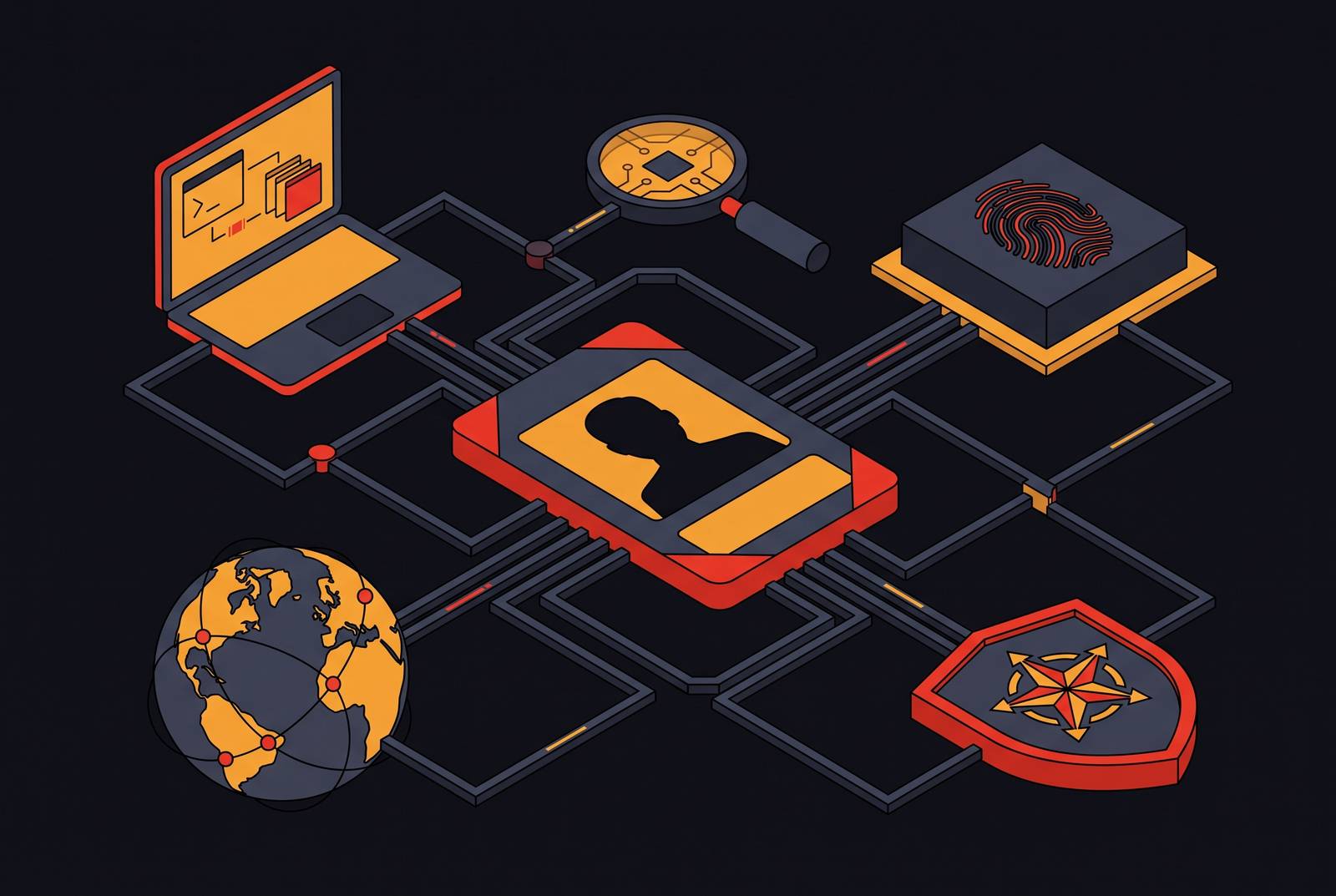
INTERPOL organizes its cybercrime work around three pillars: threat intelligence, capability building, and operations. The first pillar, threat intelligence, leans heavily on partnerships with companies that sit outside law enforcement. Project Gateway, launched in 2019, gives INTERPOL a secure legal channel to receive cyber threat intelligence from trusted private partners, cybersecurity firms, tech companies, and banks among them.
The Cybercrime Atlas does similar work from a different angle. Hosted by a global policy organization and launched through its Partnership Against Cybercrime with Fortinet, Microsoft, PayPal, and Banco Santander, the Atlas exists to turn scattered private intelligence into one shared, coordinated picture of adversary infrastructure. Fortinet sits in as a founding member. Jetton has credited the Atlas directly with enabling Operation Serengeti, and that shows how much weight this kind of shared intelligence carries in live operations.
Operation Ramz, running October 2025 through February 2026, shows the same dynamic at the ground level. Group-IB handed investigators actionable intelligence on more than 5,000 compromised accounts, some tied to government infrastructure, along with details on active phishing infrastructure across the MENA region. None of that came from a government lab. It came from a private company doing its own research, then routing it into a public enforcement channel.
How recent coordinated operations show this pipeline performing
Operations run between late 2025 and mid-2026 show this pipeline doing real work at a scale that reactive, case-by-case enforcement never managed. They also show exactly where the seams still show.
Operation Red Card 2.0 ran from December 2025 through January 2026 across 16 African countries. Agencies made 651 arrests and recovered millions of dollars, and they went after the infrastructure behind high-yield investment scams, mobile money fraud, and fake mobile loan apps. The numbers behind the headline arrests explain the scale: tens of millions of dollars in losses traced, hundreds of victims identified, thousands of devices seized, and thousands of malicious IPs, domains, and servers pulled down. In Nigeria, six members of a cybercrime syndicate were arrested for breaking into a major telecom provider's internal systems with stolen staff login credentials, and that shows how often large-scale fraud still starts with something as ordinary as a phished employee password.
Operation Ramz carried a different kind of finding buried inside it. Investigators found that 15 people working inside a Jordanian fraud operation were not willing participants. They were trafficking victims, forced to run the scam from the inside. That detail matters beyond the human cost of it. It tells analysts that some cybercrime infrastructure doesn't run on recruited criminals. It runs on coerced labor. Taking down the servers alone wouldn't have freed the people chained to running them.
A separate fugitive-focused operation, coordinated under INTERPOL's support to the EL PACCTO 2.0 initiative, ran across Latin America, the Caribbean, and Europe from June to November 2025. Seventeen countries shared intelligence in real time against 184 high-priority cases, resulting in 85 arrests of people wanted on Red Notices and the location of 18 more. That operation shows the system's other gear working in parallel with the infrastructure-takedown model: dedicated fugitive hunts, built specifically to chase named individuals rather than wait for them to turn up as a side effect of some other case.
High-resource fugitives and the accountability gap
None of this means the system catches everyone, and the gaps aren't scattered at random. They cluster around a specific kind of fugitive: one with money, jurisdictional cover, or usefulness to the government sheltering them.
Ruja Ignatova is the clearest case study. Wanted for wire fraud tied to a multibillion-dollar cryptocurrency scheme, she sits on the FBI's Ten Most Wanted list and carries an active Interpol Red Notice, backed by a reward in the millions of dollars. As of 2026, she's still at large, last reported in the Cape Town, South Africa region. Years of public notice, a serious reward, and an international manhunt haven't closed the gap between them.
Jan Marsalek tells a similar story from a different angle. Wanted for the Wirecard accounting fraud, which ran into the billions of euros, and listed on Europol's Most Wanted, he's reported to be moving in the Moscow corridor. Russia doesn't extradite its own nationals, and it has its own history of using the Red Notice system as a political weapon aimed the other direction. Those two facts together mean a fugitive with the right passport and the right host country can sit comfortably out of reach for years.
The structural issue runs deeper than any one case. Red Notices get checked for compliance before they're published. Diffusions, which can produce the exact same arrest at the exact same border, don't go through that same pre-issuance review. That gap, combined with INTERPOL's principle of equal access for every member country, gives a government with the will to misuse the system a real opening to target a political opponent with limited scrutiny on the front end. Since 2018, INTERPOL's Notices and Diffusions Task Force has gone back through previously issued Red Notices and Wanted Persons Diffusions, so it can catch abuse after the fact. That retrospective review exists and it does catch cases, but it hasn't closed the hole. A tool built to catch fraudsters and traffickers is still, by its own design, open to being pointed at the wrong target.
Private-sector threat intelligence as forensic pre-work for cross-border enforcement
Every major network taken down under a Red Notice in the 2025-2026 operations was identified first by threat intelligence, and a large share of that intelligence started in the private sector. That reframes what a research team at a cybersecurity company is actually producing. Their analysis is pre-work for an arrest that might happen a continent away, months later, not a feed that sits inside a dashboard for internal security teams to glance at.
Law enforcement needs intelligence on threat actors, criminal networks, and shifting tactics fast enough to act on it, and a lot of that information lives with private companies that run the infrastructure criminals are busy attacking. Operation Synergia III shows what that looks like in practice. Group-IB supplied intelligence on phishing infrastructure, malicious servers, and infostealer distribution networks that directly shaped which systems investigators dismantled across several countries. Fortinet and other partners added visibility into transaction patterns and emerging techniques that no single national agency could have pieced together alone.
That same logic about credibility carries over into how security companies talk to their own customers. Group-IB's intelligence works for INTERPOL because it's backed by real data, not guesswork dressed up as expertise. A practitioner reading vendor content applies the identical filter: shallow claims get spotted instantly, and real data earns trust. Cyberou builds its content work around that same principle, anchoring vendor material in live security data rather than generic marketing copy, on the theory that the credibility bar for reaching technical buyers is the same bar enforcement agencies apply to the intelligence they act on.
What tracking this system tells a security practitioner
Reading the Red Notice enforcement record as threat intelligence instead of court news reveals how criminal networks are actually structured, which countries function as safe harbors, and which operational dependencies make a given actor reachable or untouchable.
The Ramz trafficking discovery is a model for how that reading works. Finding out that 15 people inside a Jordanian fraud operation were coerced victims, not criminals by choice, reveals a dependency that pure technical takedown wouldn't have touched. A server seizure doesn't free a trafficking victim. A server seizure doesn't address that kind of vulnerability, which differs from an IP address or a phishing kit and appears only when someone is paying attention to the human structure behind the technical one.
The poly-criminal pattern running through nearly every operation covered here carries a similar lesson. Cyber fraud often sits layered on top of money laundering, trafficking routes, and drug networks, so an agency chasing something else entirely is frequently already tracking a ransomware group's financial infrastructure. Red Notice hits land as a side effect of unrelated investigations, which is exactly what happened in Trigger X.
If you're building threat models, you don't need to wait for an INTERPOL press release before updating your assumptions about adversary infrastructure. Press releases describe intelligence that was already gathered months earlier. The vendors and researchers sitting closest to that pipeline, the ones feeding Project Gateway and the Cybercrime Atlas long before any arrest makes the news, hold the earliest and sharpest picture of what's actually out there. Enforcement news is the lagging indicator. The private intelligence behind it is the leading one, and that is what to track.
Sources
- Caught by Operation Phoenix, Wanted by France: What an Interpol Red Notice Arrest Means for Extradition - Hassan Kohen, criminal law attorney in Paris
- Interpol's Operation Phoenix: 8 Red Notice Arrests and What France Does With a Red Notice File - Hassan Kohen, criminal law attorney in Paris
- International fugitive hunt leads to 85 arrests
- 201 arrests in first-of-its-kind cybercrime operation in MENA region